

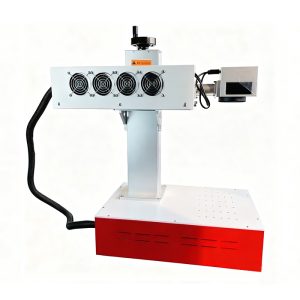
A CO₂ laser marking machine uses a high-energy-density CO₂ laser beam to ablate the material surface to form printed patterns. Its working principle: the CO₂ laser heats the workpiece surface to a critical temperature and triggers physical changes such as oxidation and vaporization, so as to realize surface marking and engraving.
CO₂ laser marking machines have a wide range of applications and are suitable for various materials including wood, rubber and leather. For plastic materials, however, the application has certain limitations. In general, thin-film plastics such as polypropylene (PP) and polyethylene (PE) tend to generate bubbles, which impair marking quality. In contrast, high-temperature-resistant plastics such as polyamide (PA), polycarbonate (PC) and polystyrene (PS) are better suited for CO₂ laser marking and can deliver clear, fine marking results.
The following factors shall be considered when marking plastics:
1.Laser power and processing speed settings vary for different plastics; marking parameters must be adjusted according to actual conditions.
2.Plastics expand under heat. Sufficient clearance must be reserved when defining laser marking positions to avoid thermal deformation compromising marking quality.
3.Beam contamination degrades marking performance. The marking lens shall be cleaned regularly to guarantee high-quality marking results.
In summary, CO₂ laser marking machine can be used for plastic marking, but appropriate marking parameters must be configured for the specific plastic grade, and various potential issues need to be monitored during marking operations.