

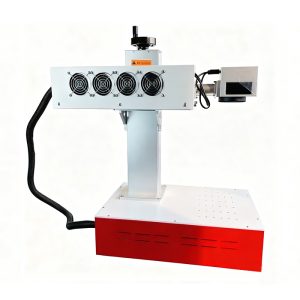
Fiber laser marking machine are high‑precision marking equipment widely used in the industrial sector. Their prices are determined by multiple key factors, which are explained as follows:
1. Laser Type
The price is closely related to the type of laser adopted. Common types include continuous‑wave fiber lasers and pulsed fiber lasers. Continuous‑wave fiber lasers are suitable for high‑speed continuous marking, while pulsed fiber lasers are applied in scenarios requiring high energy and short pulse width. Due to more complex technology, pulsed fiber lasers are generally more expensive.
2. Laser Power & Working Area
Higher laser power and larger working area lead to higher prices. High‑power models enable deeper and faster marking for demanding applications, whereas low‑power ones are more cost‑effective for basic marking tasks.
3. Marking Speed & Precision
Machines with faster marking speed and higher precision require advanced control systems and precise mechanical structures, resulting in higher costs. Equipment with moderate speed and precision is more affordable for general‑purpose use.
4. Brand & Quality
Well‑known brands deliver better performance, stability and after‑sales service but come with higher prices. Less famous brands offer lower prices, yet users need to carefully evaluate their quality and service reliability.
5. Accessories & Extra Functions
Optional configurations such as rotary axes, auto‑focus systems and pneumatic lifting platforms increase the overall price. These accessories enhance machine flexibility and multi‑functionality, adding to the total cost.
In summary, the price of a fiber laser marking machine depends on laser type, power, working area, marking speed, precision, brand, quality and additional functions. When selecting equipment, users should balance cost and performance based on actual application requirements.